
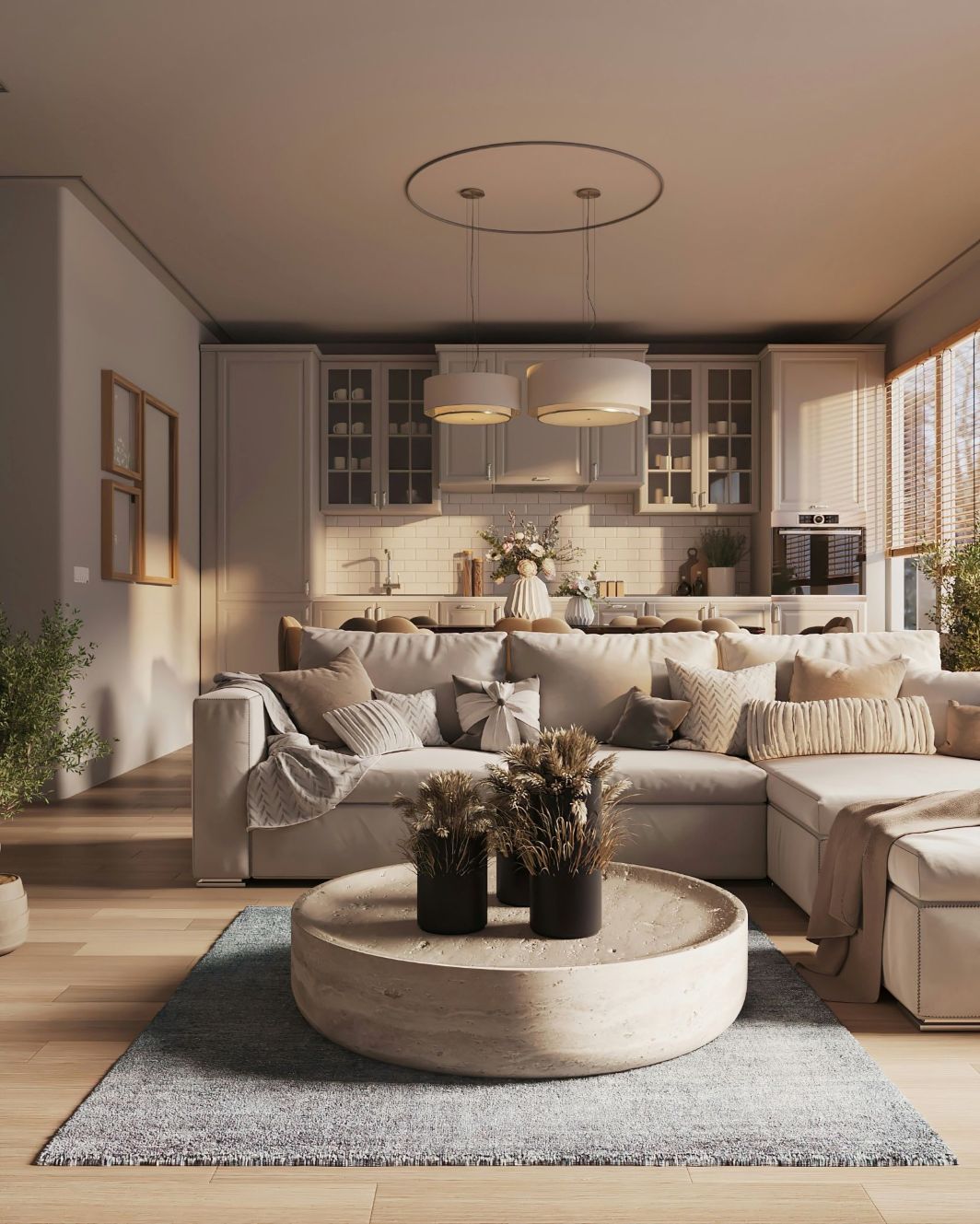
AI Interior Design: Expectation vs. Reality
Artificial intelligence has quickly made its way into nearly every industry, and interior design is no exception. Today, homeowners can upload a photo of a room, select a design style, type a few instructions, and receive a completely transformed space in seconds.
It’s impressive. It’s convenient. And sometimes, it looks absolutely beautiful.
But does an AI-generated room actually translate into a functional, comfortable, and achievable interior?
At L’IMAGE Design Studio, we believe technology can be a valuable part of the creative process. However, there is an important difference between generating an attractive image and professionally designing a space. If you are considering using AI for your next home or commercial project, understanding the expectations versus the reality of AI interior design can help you use these tools more effectively.
Expectation: AI Can Design My Entire Room
Upload a photograph and ask an AI interior design program for a “luxurious transitional living room,” “modern organic kitchen,” or “cozy contemporary bedroom,” and you may receive a surprisingly realistic result.
It is easy to assume that what you’re seeing is a completed design.
Reality: AI Is Often Better at Visualization Than Design
Many AI tools are excellent at generating inspiration and exploring different aesthetics. However, an image generator may not truly understand the physical dimensions of your room, even when the resulting image appears convincing. Research and professional assessments of generative AI continue to identify limitations involving scale, spatial relationships, technical requirements, and real-world constraints.
That beautiful sectional in the AI image might not fit through the doorway. The oversized kitchen island may leave inadequate clearance. A newly generated window might not exist at all.
In other words, AI can show you a possibility without necessarily showing you a practical solution.
Expectation: I Can Buy Everything in the AI Image
One of the most exciting aspects of AI interior design is seeing a fully furnished room almost instantly. You may fall in love with a particular sofa, light fixture, area rug, or cabinet shown in the rendering.
Then comes the obvious question: Where can I buy it?
Reality: Some of Those Products Don’t Exist
Depending on the AI platform being used, the furnishings and finishes appearing in an image may simply be generated approximations rather than actual products.
Current AI tools vary significantly. Some professional spatial-design platforms are increasingly incorporating real product catalogs and editable 3D environments, while basic image generators frequently produce furnishings and materials that aren’t connected to purchasable products.
A professional interior designer takes inspiration and turns it into reality by sourcing actual furniture, fabrics, flooring, fixtures, finishes, and accessories that complement the design while fitting the project’s requirements.
Expectation: AI Understands How My Family Lives
You can tell AI that you want a “family-friendly living room,” but that phrase means something different for every household.
Do you have young children? Pets? Frequent overnight guests? Do you entertain regularly? Does someone work from home? Do you need additional storage? Are you planning to age in place?
Reality: Great Interior Design Is Personal
A beautiful home isn’t simply a collection of attractive furniture.
Professional interior design involves understanding how people actually use their homes. A designer can ask questions, observe challenges, recognize opportunities, and develop solutions around the homeowner’s lifestyle.
AI can process the information you give it, but the human conversation remains essential to uncovering needs you may not have thought to include in a prompt.
Expectation: If It Looks Real, It Must Be Possible
Modern AI-generated interiors can be remarkably photorealistic. That realism can create another problem: an image can look so convincing that we assume everything shown can actually be constructed.
Reality: Photorealistic Doesn’t Mean Buildable
AI may create visually attractive concepts without fully accounting for construction limitations, material performance, building requirements, or other technical considerations. Designers are already reporting situations in which clients arrive with polished AI images that require significant interpretation before those concepts can become workable spaces.
This distinction becomes especially important during renovations involving kitchens, bathrooms, custom cabinetry, lighting, architectural changes, and other significant improvements.
A rendering is an idea. A professional design is a plan for making that idea work.
So, Is AI Bad for Interior Design?
Not at all.
In fact, AI has the potential to become an incredibly useful addition to the interior design process.
AI can be helpful for:
- Exploring different interior design styles
- Creating early inspiration
- Comparing colors and general aesthetics
- Developing mood-board concepts
- Visualizing possibilities
- Helping homeowners communicate what they like—or don’t like
- Quickly exploring multiple creative directions
Modern tools are also becoming increasingly sophisticated, with some platforms moving beyond simple image generation toward editable spatial models and more controlled visualization.
The key is understanding what AI should be: a tool, not a substitute for expertise.
The Best Combination: Technology + Professional Interior Design
Instead of viewing AI and professional interior designers as competitors, it makes more sense to consider how they can complement one another.
Bring your AI-generated images to your designer. Show us your Pinterest boards. Save photos of rooms you love. Tell us exactly what caught your attention—the colors, textures, furniture, lighting, atmosphere, or overall feeling.
Then let an experienced interior designer translate that inspiration into something specifically created for your home, your lifestyle, your budget, and your future.
AI can generate hundreds of beautiful rooms.
The goal of professional interior design is to create the right room for you.
At L’IMAGE Design Studio, we combine creativity, experience, thoughtful planning, and an understanding of our clients’ individual needs to create interiors that are more than beautiful images. They’re spaces designed to be lived in.
If you’ve experimented with AI interior design and are wondering how to turn your inspiration into reality, contact L’IMAGE Design Studio to start the conversation.