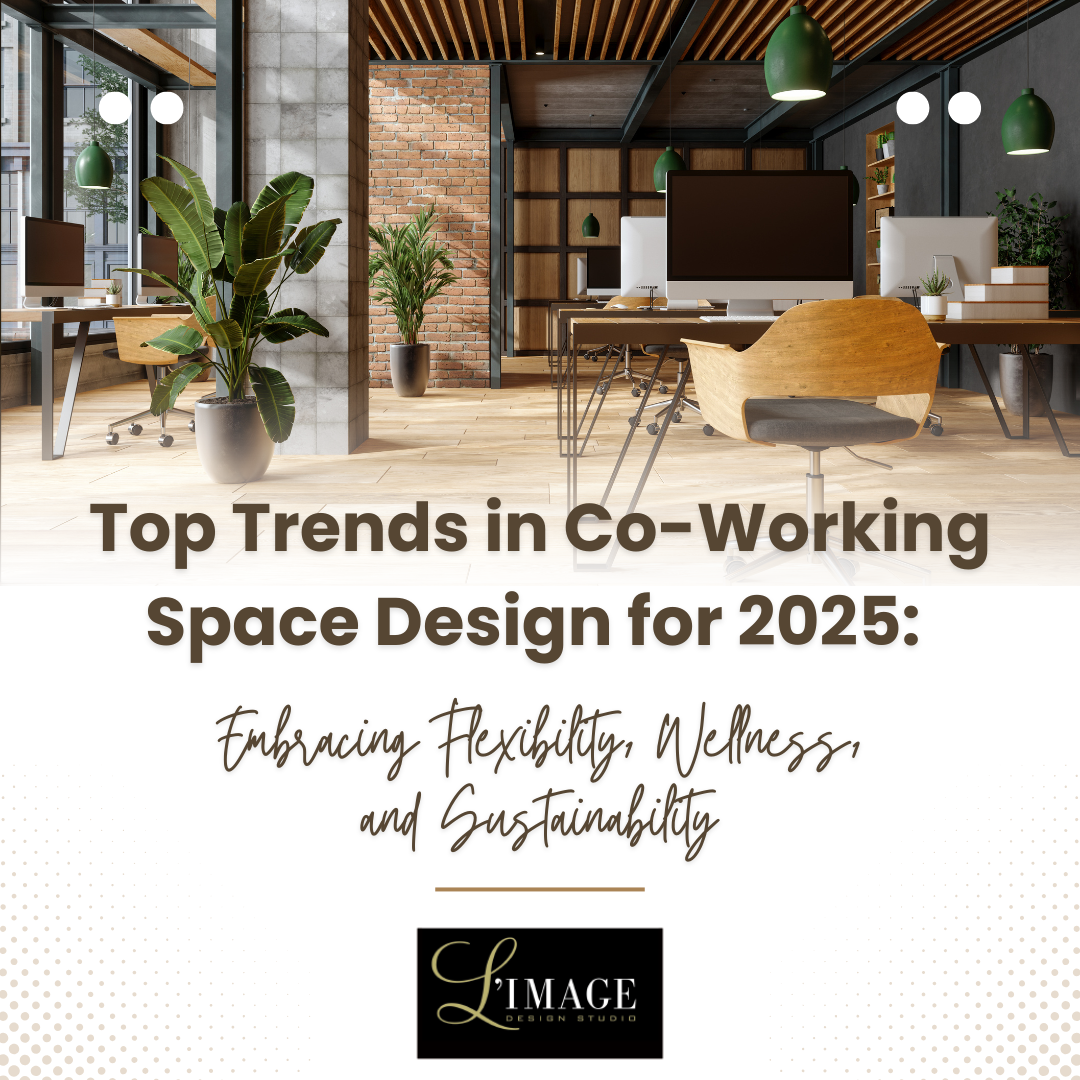
Top Trends in Co-Working Space Design for 2025: Embracing Flexibility, Wellness, and Sustainability
As we move deeper into 2025, co-working spaces continue to evolve from merely functional workspaces into dynamic environments that inspire creativity, promote wellness, and foster community. With the rise of hybrid work models and the increasing demand for more flexible office environments, co-working spaces must adapt to meet the needs of a diverse and ever-changing workforce. At L’IMAGE Design Studio, we are excited to explore the top trends that are shaping the design of co-working spaces in 2025, creating more than just a place to work but a place to thrive.
- Biophilic Design: Bringing Nature Indoors
Biophilic design has been gaining momentum for years, and it is set to be one of the most defining trends in 2025. By incorporating natural elements into the built environment, biophilic design aims to reconnect people with nature, which has been shown to boost creativity, reduce stress, and increase overall well-being.
Co-working spaces will increasingly feature natural materials like wood, stone, and plant life, as well as biophilic elements like living walls, indoor gardens, and natural light. These elements will not only create a calm and inviting atmosphere but will also promote healthier, more productive work experiences. Spaces with views of the outdoors, access to fresh air, and natural lighting will become essential components of co-working environments in 2025.
- Flexible Layouts and Multi-Functional Spaces
In 2025, flexibility will be paramount. The traditional, rigid layouts of the past are being replaced by adaptable designs that can accommodate a variety of work styles and group sizes. Co-working spaces are increasingly offering layouts that can be easily reconfigured based on changing needs, whether it’s for an individual, a small team, or a large group collaboration.
Multi-functional spaces that serve different purposes throughout the day are gaining traction. For example, a room designed for quiet focus might transform into an event space or meeting room after hours. Similarly, lounge areas may shift from casual seating during breaks to collaborative areas for brainstorming sessions. This kind of versatility will allow businesses to maximize their use of space and cater to a broader range of activities.
- Tech-Enabled and Smart Workspaces
Technology continues to play an integral role in the evolution of co-working spaces. In 2025, co-working designs will incorporate cutting-edge smart technologies that streamline operations and enhance user experiences. From voice-activated systems and touchless interfaces to smart lighting and temperature control, these technologies will make spaces more intuitive, efficient, and comfortable.
Co-working spaces will also increasingly integrate high-speed internet, video conferencing infrastructure, and collaborative tools to support hybrid and remote teams. Augmented reality (AR) and virtual reality (VR) may even find a place in meeting rooms, offering immersive experiences for virtual team-building exercises or collaborative design sessions.
Moreover, AI-driven solutions will personalize the user experience. For instance, intelligent booking systems might recommend meeting rooms based on the user’s preferences or schedule, while smart seating arrangements could automatically adjust to comfort levels based on the individual using the space.
- Focus on Wellness: Mindful Work Environments
As the world becomes more conscious of the impact of work environments on mental and physical health, the wellness trend will continue to dominate co-working space design in 2025. Co-working spaces will prioritize elements that foster both physical and mental well-being, offering a range of amenities and features aimed at reducing stress and boosting productivity.
Designs will increasingly incorporate wellness zones, such as quiet rooms for meditation, yoga studios, or fitness areas for on-site exercise. Healthy food options and filtered water stations will also be more common, as companies seek to create holistic work environments that promote both the body and mind.
Additionally, ergonomic furniture will be a key consideration in the design process. Adjustable desks, ergonomic chairs, and standing desks will become the norm as co-working spaces prioritize comfort and health. These elements will help to prevent the physical discomforts associated with prolonged desk work, such as back pain or poor posture.
- Community-Centered Design: Building Social Connections
One of the defining aspects of co-working spaces is their ability to foster a sense of community and collaboration. In 2025, this trend will become even more pronounced, with co-working spaces focusing on creating environments that encourage social interaction and networking.
Open-plan areas with flexible seating arrangements will be designed to bring people together, while private spaces for more focused work or meetings will be available for those who need them. Co-working spaces will also integrate shared amenities, such as kitchens, cafes, and lounge areas, where members can meet informally and build relationships.
Moreover, curated events and activities, from networking mixers to wellness workshops, will become an integral part of the co-working experience. Design elements like community boards, interactive art, and communal workspaces will further strengthen the sense of belonging and shared purpose within co-working environments.
- Sustainability and Eco-Friendly Materials
Sustainability is no longer just a trend but a necessity. As environmental awareness grows, co-working spaces are increasingly adopting eco-friendly design principles and materials. From energy-efficient lighting to the use of recycled and sustainable materials, the co-working spaces of 2025 will be designed with the planet in mind.
Solar panels, energy-efficient HVAC systems, and green roofs will be common features in forward-thinking co-working spaces. Additionally, designers will incorporate upcycled furniture, non-toxic paints, and eco-friendly flooring materials to minimize the environmental impact of construction and operation.
As the demand for sustainable design grows, co-working spaces will also focus on reducing their carbon footprint through waste reduction programs, sustainable sourcing, and eco-conscious operations.
As we look at 2025 and beyond, co-working spaces are set to become more than just places to work—they will be vibrant hubs of creativity, wellness, and community. The top trends in co-working space design reflect the growing demand for flexibility, well-being, and sustainability while also embracing new technologies that enhance the work experience. At L’IMAGE Design Studio, we believe that by incorporating these trends, co-working spaces can offer environments that foster collaboration, innovation, and a sense of belonging—ultimately helping businesses and individuals thrive in an ever-changing world.
If you would like more information or assistance with co-working space designs, contact L’IMAGE Design Studio by filling out the contact information form or calling (410) 370-7612.
L’IMAGE Design Studio has developed great relationships in a variety of industries throughout the thirty-plus years of collaboration on design and architecture projects. Our residential and commercial interior designers provide expertise in design and architecture services in Maryland, Virginia, DC, Delaware, and Pennsylvania.