
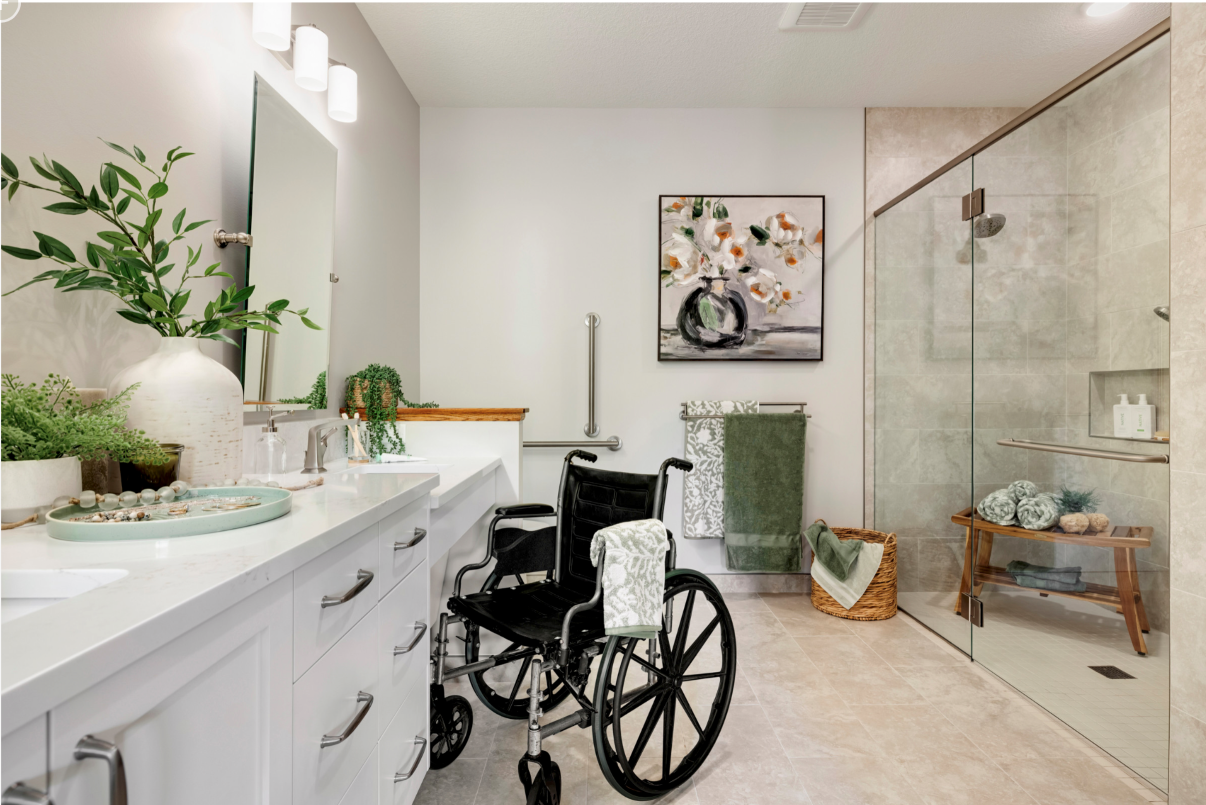
Beautiful Aging-in-Place Design: Accessibility Without the Institutional Look
For many homeowners, the goal is simple: stay comfortably and safely in the home they love for as long as possible. Aging in place can make that possible—but creating an accessible home does not mean sacrificing personality, warmth, or beautiful interior design.
At L’IMAGE Design Studio, we believe thoughtful design should support every stage of life. With careful planning, aging-in-place features can be incorporated into a home so naturally that they look like intentional design choices rather than medical or institutional accommodations.
The result is a home that is safer, more functional, and just as stylish as ever.
What Is Aging-in-Place Design?
Aging-in-place design focuses on creating spaces that remain comfortable and usable as a homeowner’s mobility, vision, balance, or physical needs change over time.
Instead of waiting until accessibility becomes an urgent concern, homeowners can incorporate subtle features during a renovation, new home build, or room redesign.
The best aging-in-place design often goes unnoticed. Wider pathways, improved lighting, accessible storage, safer bathrooms, and easy-to-use fixtures simply make the home more comfortable for everyone.
This approach is closely related to universal design, which creates environments that can be used conveniently by people of different ages and abilities.
Create a Safer Bathroom Without Creating a Clinical Space
Bathrooms are one of the most important areas to consider when designing a home for aging in place.
Fortunately, today’s bathroom products make accessibility much more attractive than it once was.
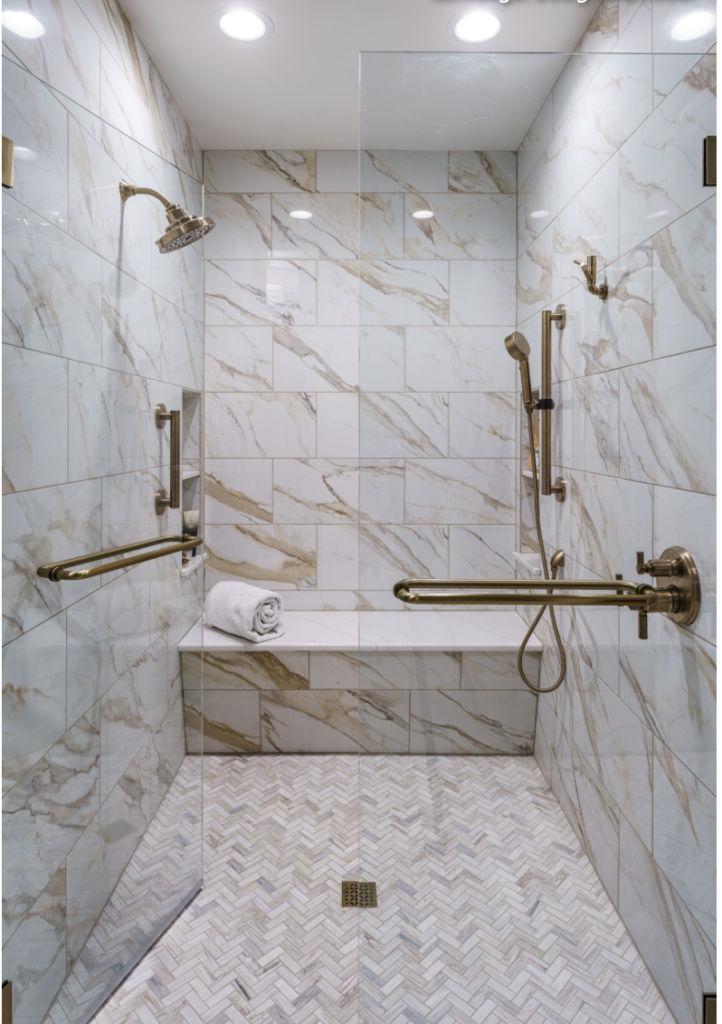
Consider replacing a traditional tub with a curbless or low-threshold shower. Large-format tile, frameless glass doors, decorative fixtures, and built-in shower niches can create the atmosphere of a luxury spa while also reducing tripping hazards.
Grab bars do not have to resemble hospital equipment, either. Modern manufacturers offer stylish grab bars in finishes such as brushed brass, matte black, chrome, and brushed nickel that coordinate beautifully with faucets, towel bars, and other hardware.
A built-in shower bench can become another attractive architectural feature while providing additional comfort and safety.
Other useful bathroom improvements may include:
- Handheld showerheads
- Comfort-height toilets
- Slip-resistant flooring
- Improved lighting
- Lever-style faucet handles
- Accessible storage
- Wider door openings
When these features are incorporated into the overall design, the bathroom can feel luxurious rather than institutional.
Design a Kitchen That Works for Every Stage of Life
The kitchen is another space where small changes can make a significant difference.
Instead of relying exclusively on upper cabinets, designers can incorporate more drawers and pull-out storage into lower cabinetry. Deep drawers make dishes, cookware, and pantry items easier to reach without excessive bending or stretching.
Pull-out shelves, appliance garages, organized pantry systems, and strategically placed storage can also reduce unnecessary movement throughout the kitchen.
Countertops may include areas at different heights to accommodate both standing and seated tasks. Touchless or lever-style faucets can provide additional convenience while maintaining a sleek appearance.
Lighting is equally important. Layering ambient, task, and under-cabinet lighting improves visibility while also creating a warm, inviting kitchen.
Make Movement Through the Home Easier
Good space planning becomes increasingly valuable as we age.
Furniture arrangements should provide comfortable circulation throughout a room without creating narrow pathways or unnecessary obstacles.
During a renovation, homeowners may also consider wider doorways or more open connections between rooms. These modifications can make a home easier to navigate with a walker, wheelchair, or other mobility aid if one is ever needed.
Even homeowners who never require mobility assistance can appreciate the openness and improved flow these design decisions create.
Transitions between different flooring materials should also be as smooth as possible. Eliminating unnecessary thresholds reduces tripping hazards and contributes to a cleaner, more contemporary appearance.
Choose Flooring With Beauty and Safety in Mind
Flooring plays an important role in both the appearance and safety of a home.
Highly polished or slippery surfaces may become problematic over time. Instead, homeowners can choose attractive flooring materials that provide better traction.
Hardwood, luxury vinyl plank, textured tile, and other materials can offer both durability and sophisticated style.
Area rugs should be carefully positioned and secured so they do not create tripping hazards. In some areas, eliminating loose rugs altogether may provide the safest solution while allowing beautiful flooring to become part of the room’s design.
Never Underestimate the Importance of Lighting
Lighting can dramatically affect how comfortable a home becomes as we age.
As eyesight changes, homeowners often benefit from additional illumination throughout the home. That does not mean every room needs harsh overhead lighting.
Layered lighting creates a more attractive and flexible solution.
Consider combining decorative ceiling fixtures, recessed lighting, table lamps, floor lamps, under-cabinet lighting, and task lighting. Nightlights or subtle pathway lighting can also help make hallways, bathrooms, and stairways safer after dark.
Light switches should be easy to access and operate. Smart home technology can provide even more convenience by allowing homeowners to control lights through switches, timers, voice commands, or mobile devices.
Incorporate Accessibility Before You Need It
One of the smartest strategies for aging in place is planning ahead.
If you are already renovating a bathroom, for example, additional blocking can be installed behind the walls so grab bars can easily be added later.
If you are remodeling a kitchen, accessible storage solutions can be incorporated into the cabinetry from the beginning.
If you are replacing flooring throughout the home, transitions can be minimized at the same time.
Making these decisions during a planned renovation is often easier and more aesthetically pleasing than making emergency modifications later.
A Beautiful Home Should Work for You
Aging-in-place design should never make a home feel like a hospital, assisted-living facility, or medical environment.
Great interior design blends function and beauty.
At L’IMAGE Design Studio, our approach to residential interior design begins with understanding how our clients live today while considering how their needs may evolve in the future. Thoughtful space planning, carefully selected materials, beautiful furnishings, and subtle accessibility features can create a home that remains comfortable and welcoming for years to come.
Whether you are planning a major renovation, designing a new home, updating a kitchen or bathroom, or simply beginning to think about the future, aging-in-place design can help protect your independence without compromising your personal style.
Your home can be accessible, functional, comfortable—and beautiful.
L’IMAGE Design Studio provides professional interior design expertise for homeowners throughout Maryland and the surrounding region. If you are considering an aging-in-place renovation or would like to explore ways to make your current home more comfortable for the years ahead, contact L’IMAGE Design Studio to begin creating a space designed around the way you want to live.